Siding Options For Your Outer Banks Home

beachpainting • May 9, 2023
Wooden slats shade a building facade with cedar siding, with glimpses of sky.

It seems to be human nature to get as much out of a product as possible before replacing it. A great example of this is siding. People hope against their better judgement that a paint job will suffice when the siding of the house has far exceeded its life expectancy. Sometimes a little paint and caulk will buy you a couple of years, but this is usually not the case.

If you see evidence of fungus and wood rot, separated seams, warped or split boards, an abundance of missing shakes, or you find yourself painting the exterior of your home every three to four years…it may be time to replace your siding. Like most things on the Outer Banks, the harsh environment often means your siding won’t last as long here as it does in other parts of the country.

What are the best siding options on the Outer Banks?

Every siding system has advantages and drawbacks. It’s important to realize the installation and maintenance costs before you commit. The siding systems that are most popular and seem to perform best on the Outer Banks are wood (cedar), fiber-cement board (Hardie Plank), and composite/engineered wood (SmartSide).
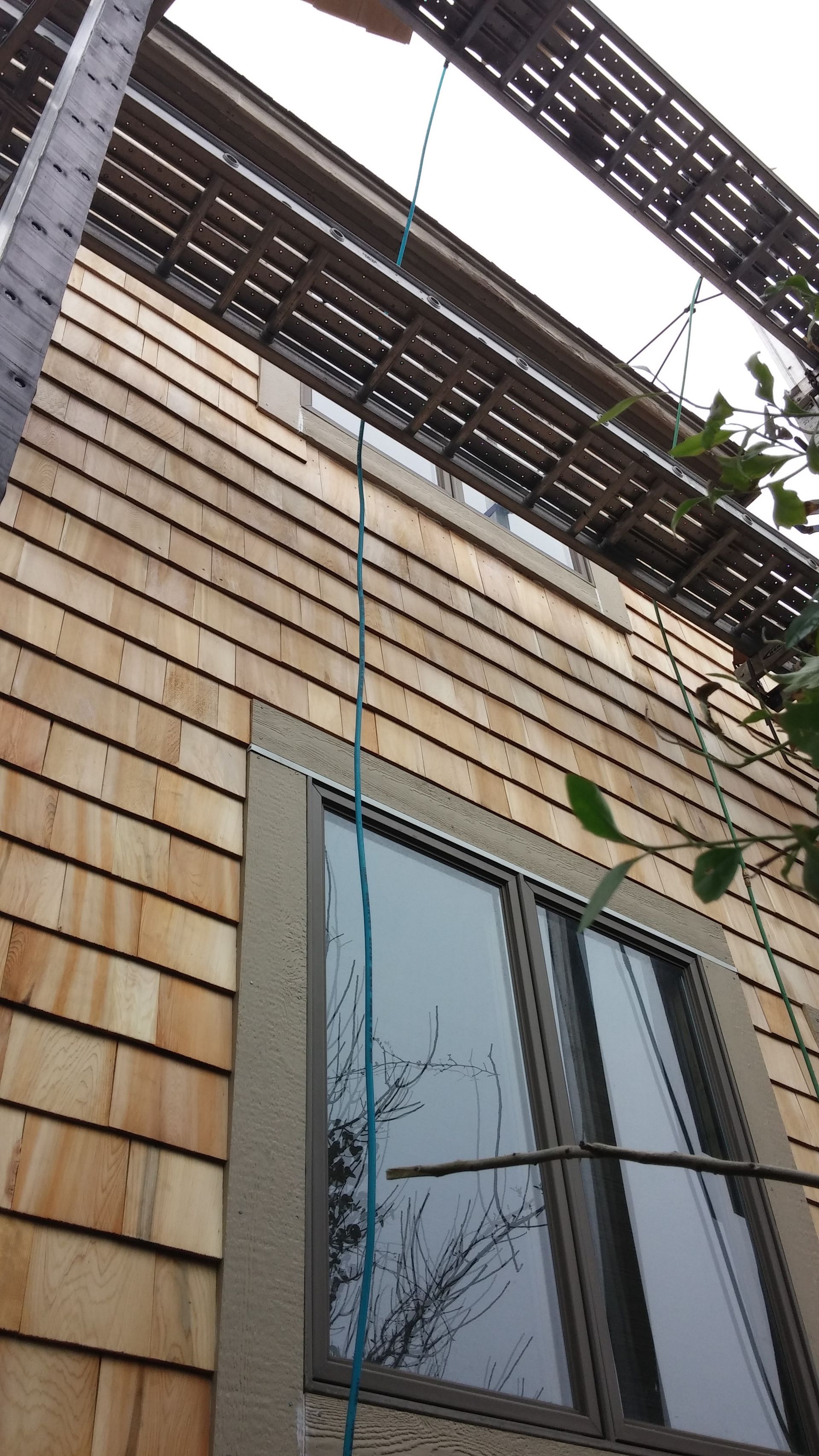
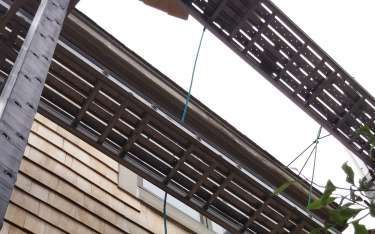
Exterior view of a building with wood siding, a window, and a metal structure overhead. A rope hangs down.Wood

Whether you install clapboards, panels, or shakes, you will need to protect the wood from the elements and from insects. Pine, spruce, and cypress are commonly used throughout the country, but cedar tends to be the most popular on the Outer Banks, owing to its ability to resist rot and insect damage.

You’ll likely have to re-paint or re-stain the cedar every 3-5 years. If you choose to go with a more natural look (i.e. clear sealer, toner, or semi-transparent stain) you’ll still need re-coat the surface according to the severity of the environment you live in. A house on the beach will require more maintenance than a house that is further inland. If properly maintained, wood siding should last about 20 years.


Fiber Cement Board (Hardie Plank)

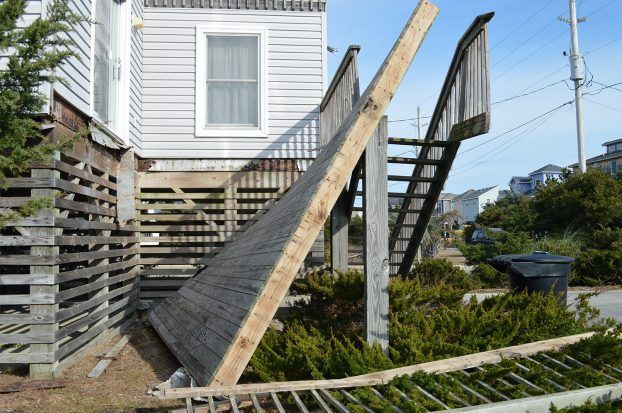
Fiber cement board, commonly known as Hardie Plank, is relatively low maintenance. It’s a manufactured product made of sand,Staircase with white railing next to light-colored siding.cement, and cellulose fibers. It is more durable and outperforms vinyl siding. It is available in a number of profiles and, from a distance, it looks like wood. It’s fire-resistant and is not prone to insect damage.
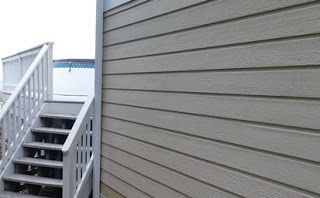
If installed properly, fiber cement siding doesn’t require painting as often as wood, but the boards are heavier, which means they come in shorter lengths and are more labor-intensive to install. Over time, fiber cement boards have a tendency to become brittle and crack. They also have a tendency to wick up water if they are installed (improperly) in contact with the ground or in contact with any surface where water can pool.

Composite or Engineered Wood (SmartSide)Two-story yellow beach house with white railings, balconies, and a tall, shingled accent.
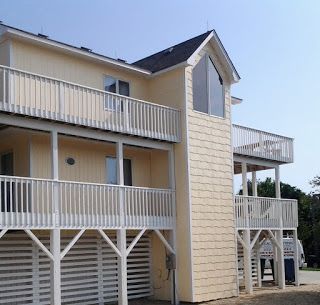
Composite wood siding has become extremely popular on the Outer Banks. It is made with wood fibers and epoxy resin and is impervious to moisture and insect damage. It is more durable than vinyl or wood, and seems to be better suited to this environment than fiber cement siding. It’s relatively inexpensive and relatively easy to install.

Installation practices

Regardless of which siding system you choose, the siding must be properly installed. After removing your old siding, your contractor should check everything visible before installing the new siding. Plywood sheathing should be checked for rot and insect damage. Plywood sheathing at the ground level should be pressure-treated.

In most cases, the house wrap should be replaced. We prefer to use 30-lb asphalt felt paper rather than the polypropylene fiber paper (Tyvek). It is extremely durable and has no chemically adverse reactions to different types of wood or metal.

Post Installation

After your siding is installed and inspected, you’ll need to paint or stain it. This is something you definitely want to do right the first time. Remember that every layer of paint depends on the layer(s) beneath it. Your painting contractor should specify only premium quality primers and paints. This will have a major impact on how long your paint job lasts and how well your new siding is protected.

Logo: Diamond shape with beach scene, black outline, text
Person looking up, reaching towards a bright blue sky with fluffy white clouds, framed by a white wall.
By beachpainting February 12, 2026
Each year, most paint manufacturers release a “Color of the Year” along with a palette of complementary shades. Pantone — the global authority on color — is best known for the Pantone Matching System (PMS), which provides a standardized language for identifying, matching, and communicating color across design, fashion, printing, and manufacturing. Their annual selection is often a strong predictor of broader color trends and frequently aligns with the palettes chosen by major paint manufacturers.
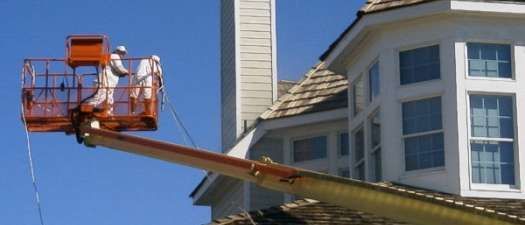
Workers in lift painting the exterior of a white house with a blue sky background.
By beachpainting January 6, 2026
Winter is here on the Outer Banks, and if your home is part of a rental program, you’re likely working through a long checklist to prepare for the upcoming season.
Overhead view of a hurricane swirling over a deep blue ocean, white clouds form a spiral.
By beachpainting August 25, 2025
Hurricane season on the Outer Banks occurs between June and November, with the peak of the season occurring from Mid-August to Mid-October. If you own property on the Outer Banks, you’re already acutely aware of this. With Hurricane Erin currently wreaking havoc along the East Coast, now is a good opportunity to provide some quick tips for your home during hurricane season.
Light green three-story house with white trim, balconies, and turret under a blue sky.
By beachpainting July 9, 2025
When it comes to home improvement, few things make an instant visual impact like a fresh coat of paint. Whether it's reviving weather-worn siding or refreshing an outdated interior, painting can breathe new life into your space. But as you start collecting quotes, you may wonder: why does a good painting contractor cost more than others?
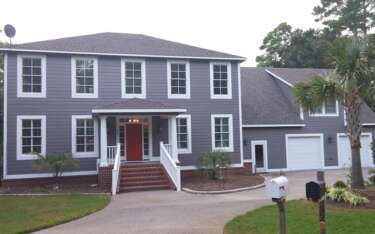
Gray house with white trim, red door, and a circular driveway.
By beachpainting June 24, 2025
The Transformative Power of Washing and Painting Your Home
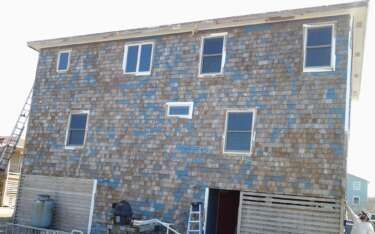
Two-story house with weathered blue shingles, several windows. Ladder leans against the side.
By beachpainting June 10, 2025
If you’ve been putting off painting your house, you’re not alone—but it may cost you more than you think. Summer is the best time of year to paint your Outer Banks home. If you've noticed signs of paint failure (e.g. fading, peeling, blistering, chalking), give us a call today.
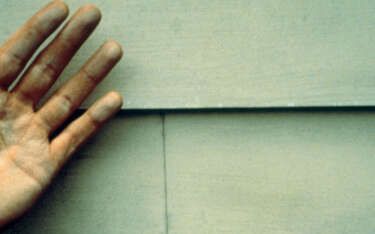
Hand with dusty fingers next to light-colored, horizontal wall siding.
By beachpainting May 27, 2025
If you've noticed a fine, powdery residue on your painted walls or outdoor surfaces, you may be dealing with chalking paint. This is a fairly common issue that occurs when paint breaks down over time due to weather exposure, UV rays, or low-quality paint ingredients. It’s especially prevalent on exterior surfaces (especially fiber cement siding). What Causes Chalking? Chalking happens when the paint binder deteriorates, allowing pigment particles to loosen and form a chalky dust. While it’s a natural part of aging for some paints, excessive chalking can affect appearance, stain surrounding surfaces, and prevent new paint from adhering properly. How to Fix Chalking Paint Test for Chalking: Rub your hand or a dark cloth over the surface. If it comes away dusty, you have chalking. Clean the Surface: Use a stiff brush or pressure washer to remove as much chalk as possible. Follow up with a mild detergent and rinse thoroughly. Let It Dry: Ensure the surface is completely dry before proceeding. Prime If Necessary: For areas with stubborn residue or if you're repainting, apply a high-quality, binding primer suited for chalky surfaces. Repaint: Choose a premium, weather-resistant paint and apply as recommended. Preventing Future Chalking Invest in high-quality paint with strong UV resistance and proper binders. Regular maintenance, such as gentle washing and inspections, also helps keep surfaces looking fresh. By addressing chalking early and using the right materials, you can extend the life and look of your paint job for years to come!
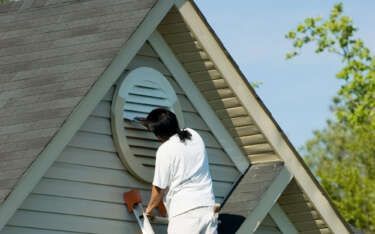
Person on a ladder painting a house's exterior siding near an oval vent.
By beachpainting May 8, 2025
Summer is a great time to paint your Outer Banks home if it is not in rental program. Temperatures and humidity are relatively consistent and longer daylight hours generally lead to shorter project durations.
Hand touching rotted wood siding with damaged building wrap, revealing underlying rot, outdoors.
By beachpainting October 29, 2024
Wood rot in homes and buildings on the OBX is a common occurrence. It is caused when bacteria and fungi have a chance to grow in a damp environment. Our weather (high humidity, nor’easters, hurricanes, etc…) provides enough moisture to promote wood rot. If you know what to look for, you can often catch the rot early enough to avoid major structural damage.
Paint roller and tray with a paint can in the background; preparing to paint.
By beachpainting June 25, 2024
In a previous blog post, we tackled the topic of how to determine whether your house needs to be repainted. If your paint job is holding up well, but you have minor paint damage to your walls from children, pets, or summer guests, the following guide will help you. Step-by-Step Guide to Wall Touch-Ups: Clean the Surface: Begin by cleaning the damaged areas with a mild detergent and water. Remove any dust, dirt, or greased that may affect paint adhesion. Prepare the Surface: Use a fine-grit sandpaper (around 220-grit) to smooth rough edges around the damaged area. Wipe clean with a tack cloth to remove any sanding dust. Prime (if necessary): For significant repairs or bare patches, apply a primer to ensure proper adhesion and uniformity of the topcoat. Apply Paint: Use a small brush (angled brushes work well for corners and edges) or a roller for larger areas. Apply the paint in thin layers, feathering the edges to blend with the surround wall. Allow each coat to dry completely before applying the next coat. Blend and Feather: To achieve a seamless finish, father the edges of the touch-up paint into the existing paint. This technique helps to minimize visible lines and ensure a uniform finish. Expert Tip: Matching Paint SheenSatin and eggshell finishes will lose their sheen over time, which means your wall touch-up may be visible to the naked eye (even if the color match is perfect). One method to assure uniformity in sheen is to add a few drops of water into your paint bucket (assuming you are using a water-based paint). If you are touching up an oil-based paint, add a little paint thinner.